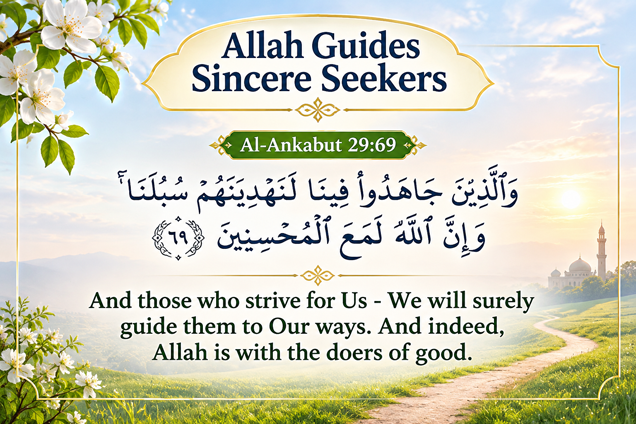
 Qur’anic Verses About Guidance to the Truthلهداية إلى الحق
20 selecte
 {loadmoduleid 116}
 1. Fulfill an Obligation Upon Us
Da’wah is recognised by the majority of scholars as being obligat
 Quran verses about Dawah
مَا عَلَى الرَّسُولِ إِلَّا الْبَلَاغُ و
 Objection to Islam is often raised against the death penalty prescribed for apostasy (abandonment
 Homosexualityand lesbianism have been dubbed “alternative life-styles,” “personal prefe

- Details
- Written by Administrator
- Category: Da'wah to Buddhists
- Hits: 161

FILIAL PIETY IN CONFUCIANISM AND ISLAM: A COMPARATIVE LITERARY ANALYSIS OF QUR’AN, HADITH, AND FOUR CHINESE CLASSICS
BY: ABDUL SALAM MUHAMAD SHUKRI, OSMAN BIN ABDULLAH
Source: Islam and Civilisational Renewal (ICR) Journal. ICR is published and distributed by International Institute of Advanced Islamic Studies (IAIS) in Malaysia
Osman bin Abdullah (Chuah Hock Leng) and Abdul Salam Muhamad Shukri are Associate Professors in the Department of Usul al-Din and Comparative Religion, Kulliyyah of Islamic Revealed Knowledge and Human Sciences, International Islamic University Malaysia (IIUM); Normala Othman is an Assistant Professor in the Department of English Language and Literature, IIUM.
Abstract
This article is an attempt to compare the teachings of Confucius and Islam, specifically The Four Books, which are authoritative works on Confucius, and the original sources of Islam, Qur’an and Sunnah.
The Four Books are the most quoted sources of Confucius’ thought, namely The Great Learning (Da Xue 大学), The Doctrine of the Mean (Zhong Yong 中庸), The Confucian Analects (Lun Yu 论) and The Works of Mencius (Mengzi 孟子). The focus shall be on the concept of family and filial piety as found in Confucianism and Qur’an and Sunnah.
Both the teachings of Confucius and Islam emphasise the importance of virtues, ties and order in the family system, for example, the husband is the head of the family and responsible for the family’s existence and security.
Islam and Confucianism are both patriarchal, and the husband and men are protectors of the family and deserve much respect. Young members of the family must respect and obey the elders and vice versa. To Confucius, these virtues are the heavenly way and must be cultivated and developed accordingly as li (礼) or good manners from an early age. The young and old must be treated according to their age. Similar values are also upheld in Islam. However, there are also differences between the two approaches which shall be highlighted as well.
- Details
- Written by Administrator
- Category: Da'wah to Buddhists
- Hits: 166
A person who undertakes the task of da’wah should also have a basic knowledge of his or her addressees.
It is quite understandable that Muslims have difficulty convincing Buddhists about God, as their religion does not give any significance to the belief in the existence of God.
But we know every human, whether Muslim or Non-Muslim, knows of God in the depths of their hearts, possibly in a half-forgotten manner. This is the reason why Allah Almighty commands us to remind the non-Muslims of Allah:
فَذَكِّرْ إِن نَّفَعَتِ الذِّكْرَىٰ ﴿٩﴾ سَيَذَّكَّرُ مَن يَخْشَىٰ ﴿١٠﴾
Remind then, [others of the truth, regardless of] whether this reminding [would seem to] be of use [or not](9).He who fears [Allah] will be reminded.(10) [Quran 87:9-10]
The foregoing indicates that our duty is to awaken the people to the truth of their origin as God’s creation. Ask them: where do you come from in an ultimate philosophical sense.
Whether they give you the right answer or not, you may begin by giving them the Islamic answer. And if your friend is willing to listen, you can give an idea of God as described in the Quran too.
- Details
- Written by Administrator
- Category: Da'wah to Buddhists
- Hits: 272
Buddhism
ISLAM
Practices
Meditation, the Eightfold Path; right view, right aspiration, right speech, right action, right livelihood, right effort, right mindfulness, right concentration
Five pillars: Testament that there is one God and Muhammad is his messenger (shahadah); prayer five times daily; fast during Ramadan; charity to the poor (zakat); pilgrimage (Hajj).
Place of origin
Indian subcontinent
Arabian Peninsula, Mecca at Mount Hira.
Use of statues and pictures
Common. Statues are used as meditation objects, and revered as they reflect the qualities of the Buddha.
Images of God or prophets not permitted. Art takes the form of calligraphy, architecture etc. Muslims distinguish themselves from other groups by not drawing lifelike human works, which could be mistaken as idolatry. No image is representative of God
Belief of God
The idea of an omniscient, omnipotent, omnipresent creator is rejected by Buddhists. The Buddha himself refuted the theistic argument that the universe was created by a self-conscious, personal God.
Only one God (monotheism). God is the one True Creator. God has always existed, none existed before him and will exist forever. He transcends life and death. No part of His creation resembles Him, He cannot be seen, but sees all.
Founder
The Buddha (born as Prince Siddhartha)
Prophet Muhammad. According to Islamic scripture, all people who follow God’s revealed guidance and the messengers sent with it ‘submit’ to that guidance, and are considered Muslims (ie. Adam, Moses, Abraham, Jesus, etc.).
- You are here:
-
Home

- Dawah to Buddhist