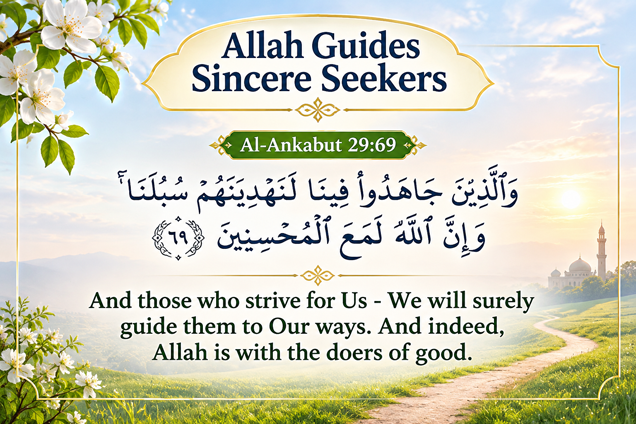
 Qur’anic Verses About Guidance to the Truthلهداية إلى الحق
20 selecte
 {loadmoduleid 116}
 1. Fulfill an Obligation Upon Us
Da’wah is recognised by the majority of scholars as being obligat
 Quran verses about Dawah
مَا عَلَى الرَّسُولِ إِلَّا الْبَلَاغُ و
 Objection to Islam is often raised against the death penalty prescribed for apostasy (abandonment
 Homosexualityand lesbianism have been dubbed “alternative life-styles,” “personal prefe
- Details
- Written by Administrator
- Category: Articles
- Hits: 229

Definitions and terminology
The word da’wah comes from the Arabic trilateral verb stem da-a-ya-
Linguistically, da’wah means ‘to invite’ or ‘to call’.
The technical / shari meaning of the word da’wah includes: ‘calling people to the din of Allah and his Messenger. It is used in this sense in Q. 16:125.
ادْعُ إِلَى سَبِيلِ ادْعُ إِلَىٰ سَبِيلِ رَبِّكَ بِالْحِكْمَةِ وَالْمَوْعِظَةِ الْحَسَنَةِ ۖوَجَادِلْهُم بِالَّتِي هِيَ أَحْسَنُۚإِنَّ رَبَّكَ هُوَ أَعْلَمُ بِمَن ضَلَّ عَن سَبِيلِهِۖوَهُوَ أَعْلَمُ بِالْمُهْتَدِينَ ﴿١٢٥﴾
Invite to the way of your Lord with wisdom and good instruction, and argue with them in a way that is best. Indeed, your Lord is most knowing of who has strayed from His way, and He is most knowing of who is [rightly] guided. (Surat al-Nahl, 16:125)
Scholarly statements regarding ‘da’wah’
Shaykh al-Islam Ibn Taymiyyah said, ‘Da’wah is to call people to believe in Allah and what His Messengers came with by accepting what they came with and obeying them in what they commanded….
‘Da’wah to Allah entails calling to all that He commanded and forbidding all that He forbade; and that is amr bi’l maruf wa’l-nahy ‘an al-munkar [‘enjoining the good and forbidding the evil’] precisely.’
Shaykh Abd al-Aziz b. Abd Allah b. Baz wrote concerning da’wah, ‘As for its [da’wah’s] ruling, the evidences within the Qur’an and Sunnah indicate the obligation of establishing da’wah to Allah and that it is from the fundamental obligatory duties.’
The Qur’an is a book of dawah.
If we consider the stories of the Prophets we do not encounter descriptions of what they looked like, how they prayed or the amount of dhikr they made. If you were to be asked, ‘How many times did Nüh fast a week?’ you will struggle to find an answer.
The reason for this is that the stories of the Prophets are stories of da’wah, every single Prophet was sent to humanity to deliver the message of tawhid, the message of Islam.
The Qur’an commands us to give da’wah in various places, for instance, Allah says:
وَلْتَكُن مِّنكُمْ أُمَّةٌ يَدْعُونَ إِلَى الْخَيْرِ وَيَأْمُرُونَ بِالْمَعْرُوفِ وَيَنْهَوْنَ عَنِ الْمُنكَرِ ۚ وَأُولَٰئِكَ هُمُ الْمُفْلِحُونَ ﴿١٠٤﴾
Let there arise out of You a group of people inviting to All that is good (Islam), enjoining Al-Ma’rûf (i.e. Islamic Monotheism and All that Islam orders one to do) and forbidding Al-Munkar (polytheism and disbelief and All that Islam has forbidden). and it is they who are the successful.(Surat Al Imran, 3:104)
كُنتُمْ خَيْرَ أُمَّةٍ أُخْرِجَتْ لِلنَّاسِ تَأْمُرُونَ بِالْمَعْرُوفِ وَتَنْهَوْنَ عَنِ الْمُنكَرِ وَتُؤْمِنُونَ بِاللَّهِ ۗ وَلَوْ آمَنَ أَهْلُ الْكِتَابِ لَكَانَ خَيْرًا لَّهُم ۚ مِّنْهُمُ الْمُؤْمِنُونَ وَأَكْثَرُهُمُ الْفَاسِقُونَ ﴿١١٠﴾.
You are the best nation produced [as an example] for mankind. You enjoin what is right and forbid what is wrong and believe in Allah. If only the People of the Scripture had believed, it would have been better for them. Among them are believers, but most of them are defiantly disobedient. (Surat Al Imran, 3:110)
Your Da’wah team
Select your ameer/ah, who will…
• Speak on behalf of the team – Don’t forget the etiquettes of being a leader, it is not a dictatorship and a good leader consults everyone for their opinion and input. Just like the leadership style of the Prophet Muhammad().
• Facilitate team discussion – Remember that not everyone is confident and an extrovert, make a conscious effort to get everyone involved in the discussion.
• Make the final decision – There may be difference of opinion but it is the ameer/ah’s job to make a decision based upon the varied views.
• Keep your team quiet while others are talking This is not only good etiquette but by keeping the team quiet ensures that they are learning from what other people have to say.
As a team…
• Introduce yourselves
Select your Team Name
• Discuss your projects
Write down minutes of your meetings.
Create a WhatsApp group or other means to communicate with eachothers
- Details
- Written by Administrator
- Category: Articles
- Hits: 219
Sheikh Muhammad Saleh Al-Munajjid
In the Name of Allah, Most Gracious, Most Merciful.
All praise and thanks are due to Allah, and peace and blessings be upon His Messenger.
In this fatwa:
- Dawah is the best vocation and the most excellent action a person can do.
- Being of this excellent place, dawah should be conducted with the highest level of morality, and the tools of dawah should be free from anything that contaminates it and diverts it from its way.
- There is nothing wrong with female converts asking men about the rulings of Islam. Women during the Prophet’s lifetime used to ask him about religious matters.
Shedding light on the ruling of men making dawah to women and the guidelines that should be followed in this regard, Sheikh Muhammad Saleh Al-Munajjid, a prominent Saudi Muslim scholar and lecturer, states,
Islam has set out basic guidelines governing the relationship between men and women in a manner that achieves the aims of the Shari`ah.In addition, Islam aims at protecting Muslim men and women from the things that lead to fitnah (temptation).
- Details
- Written by Administrator
- Category: Articles
- Hits: 230
Importance of following the path of Allah
Allah created man and caused him to dwell on this earth, but He did not forsake him. Rather He gave him what he needs of food, drink and clothing, and revealed to him throughout the ages a path to follow and be guided by. The interests and happiness of mankind at every time and in every place depend upon following the path of Allah and rejecting all others:
وَأَنَّ هَٰذَا صِرَاطِي مُسْتَقِيمًا فَاتَّبِعُوهُ ۖ وَلَا تَتَّبِعُوا السُّبُلَ فَتَفَرَّقَ بِكُمْ عَن سَبِيلِهِ ۚ ذَٰلِكُمْ وَصَّاكُم بِهِ لَعَلَّكُمْ تَتَّقُونَ ﴿١٥٣﴾
“And verily, this (i.e. Allah's Commandments mentioned in the above two Verses 151 and 152) is My straight path, so follow it, and follow not (other) paths, for they will separate you away from His path. This He has ordained for you that you may become Al-Muttaqun (the pious)” [al-An'am 6:153 – interpretation of the meaning]
Islam is the last of the heavenly religions and the Quran is the last of the heavenly Books. Muhammad (peace and blessings of Allah be upon him) is the last of the Prophets and Messengers. Allah commanded him to convey this religion to all of mankind:
وَهُوَ الْقَاهِرُ فَوْقَ عِبَادِهِ ۚ وَهُوَ الْحَكِيمُ الْخَبِيرُ ﴿١٨﴾
“And He is the subjugator over His servants. And He is the Wise, the Acquainted [with all]” [al-An’am 6:18]
Page 2 of 2
- You are here:
-
Home

- Articles